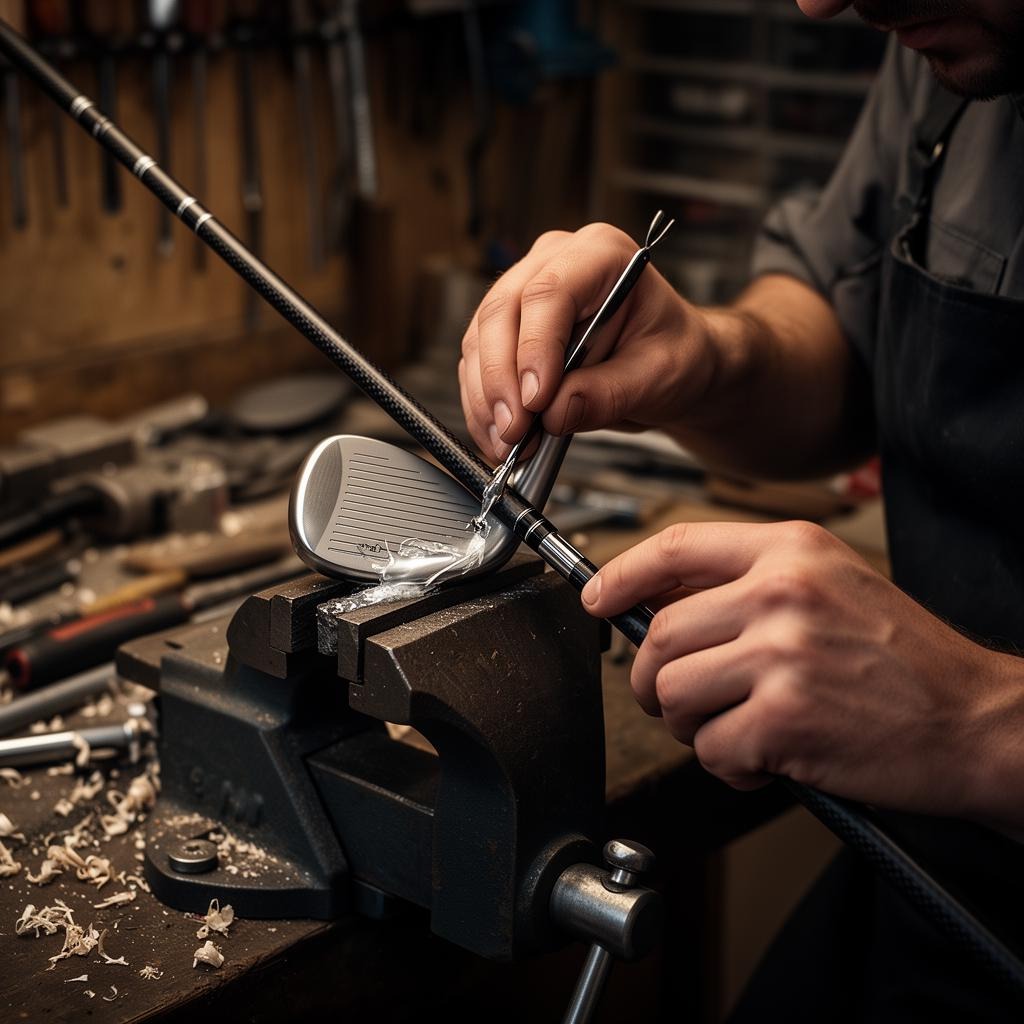
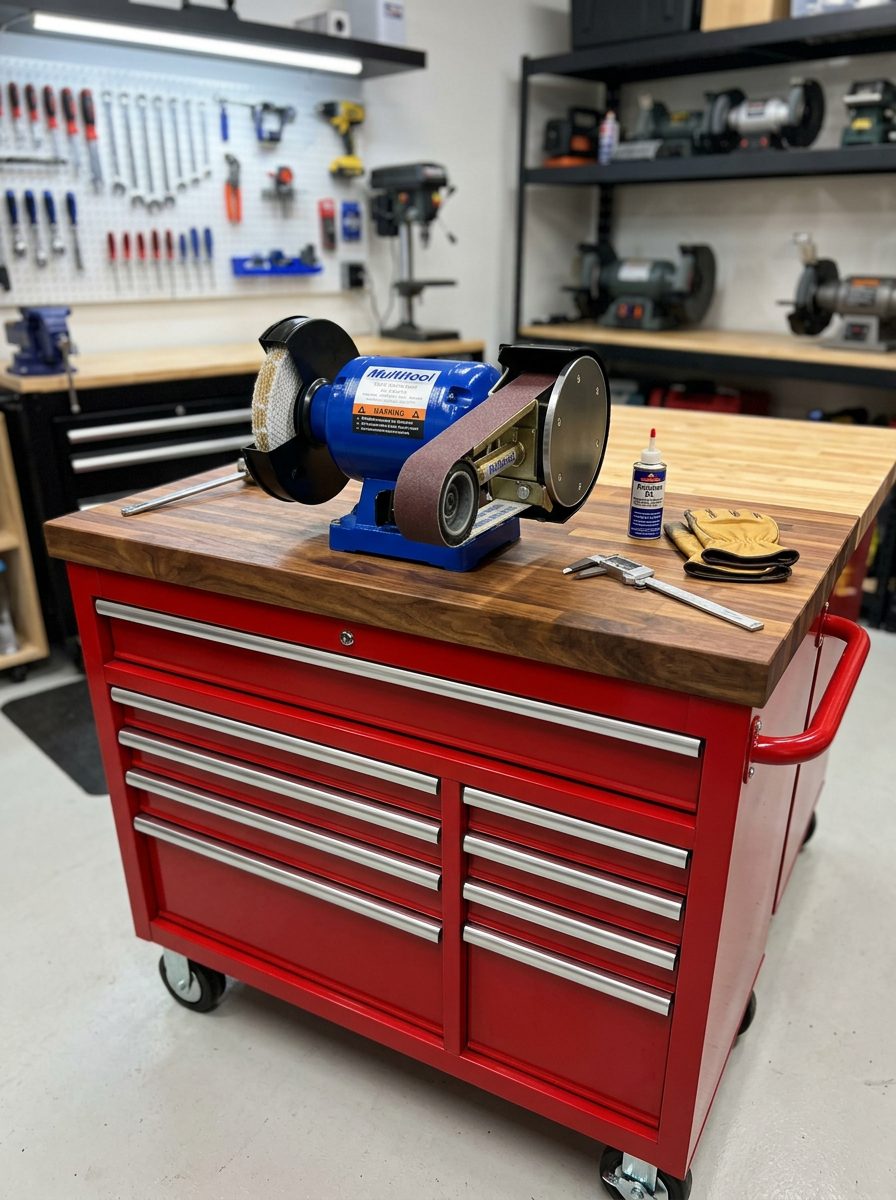
Most clubs that come across the bench arrive with a symptom rather than a diagnosis — a driver that suddenly feels heavy, irons that catch the turf on one side, a putter that has been pulled left since a re-grip two seasons ago. The first thing we do is measure everything before we change anything: length off the heel to the butt cap, static swing weight on a calibrated scale, loft and lie on a gauge, and grip diameter with a set of pins. Those numbers go on a written build sheet so there is a factual before-and-after, not an opinion.
Regripping
Old grips come off with a hook blade and the shaft is scraped clean of residual tape and adhesive — skipping that step is why grips slip a month later. Tape build-up is applied in wraps to hit the diameter you actually want: a half-wrap under the lower hand is common for players fighting a hook, a full extra wrap for arthritic hands. Every grip is set with the logo aligned to a laser line and left to cure before it goes back in the bag.
Cost drivers: grip model and price, number of extra tape wraps, whether old grips need solvent-heavy removal, and midsize or jumbo sizing.
Shaft installation & removal
Steel comes out under controlled heat so the hosel is never scorched; graphite is pulled with a shaft puller and a heat shield so the tip can often be reused. Hosel bores are reamed clean, tips abraded, and bonds set with a shafting-bead epoxy mix that fills tolerance gaps instead of running out of the hosel. Ferrules are turned flush rather than sanded on the club.
Cost drivers: steel versus graphite, whether the old shaft must be saved, tip trimming and re-spining, and ferrule replacement.
Adaptor removal & install
TaylorMade, Titleist, Callaway and Ping adaptors are pulled, cleaned, and re-timed so the sleeve setting on the label matches the loft actually delivered at address. A driver that reads 'neutral' but sits two degrees open is a common find — it is a five-minute check that saves a lesson's worth of frustration.
Cost drivers: adaptor availability, whether the tip is already trimmed, and re-gluing versus first-time installation.
Loft & lie
Heads are checked on a gauge before bending, then bent in small increments with the sole supported so the hosel takes the load evenly. Cast heads get treated more conservatively than forged, and cast-to-the-limit sets are flagged rather than forced. We re-measure after every bend and record the final numbers.
Cost drivers: number of clubs, forged versus cast heads, and how far from spec the set arrived.
Swing-weight matching
A set that reads D0 through D6 across the irons feels like six different clubs. Tip weights, hot-melt, lead tape under the grip cap and counter-balancing bring the set to a single target so tempo carries from the 5-iron through the wedges without a mental adjustment on each swing.
Cost drivers: how far apart the set currently reads, whether weights must be added internally, and grip changes that shift the balance point.
Full-set blueprint
The whole bag is measured and documented: length, loft, lie, swing weight, grip size and shaft in every slot, plus the gaps between clubs. Most players discover a 4-degree gap somewhere in the scoring clubs and two wedges that overlap. The blueprint is yours to keep and becomes the reference for every future job.
Cost drivers: number of clubs in the bag and whether corrective work is performed at the same visit.