Clubs built to your swing, not the rack.
A fitting at NiceDivot starts with the set you already own. We measure and analyze every club — loft, lie, length, shaft, grip, and swing weight — then tune what's worth keeping to your swing instead of pushing you toward a new purchase. Here's how a fitting and set analysis works on the bench at NiceDivot.
What a fitting actually measures.
Interview & Goals
Before a single club is measured, we talk through your misses, ball flight, typical scores, and what you want from the bag. Fitting is solving a problem — we define the problem first.
Shaft Profile
Flex, weight, torque, and kick-point change launch, spin, and dispersion more than almost anything else. We match shaft to your tempo and transition, then confirm it on data.
Length, Lie & Loft
We measure static and dynamic lie, set length to your build and posture, and tune loft so gaps stay consistent through the set — flat sole contact, predictable launch.
Grip & Build Spec
Grip size and weight quiet the hands; swing weight ties the set together. We finalize a build sheet so every iron, wedge, and wood matches a single, repeatable feel.
Many fitting adjustments are core bench work — see shaft installation, loft & lie, regripping, and swing-weight tuning for the full menu. Each measurement is verified on calibrated equipment and recorded on a build sheet so the spec can be reproduced part-for-part, season after season. That repeatability matters whether we are adjusting one wedge or blueprinting an entire bag. You also get a clear picture of why each change was made, which makes future repairs and replacements much simpler.
We fit golfers across Mount Pleasant, Charleston, Isle of Palms, and Daniel Island — players who deal with humid air, Bermuda grass, and wind that shifts through the day. A fitting here is built around the courses you actually walk, not a generic indoor range. Every spec is recorded so your next set can pick up exactly where this one leaves off, with no guesswork about what worked.
And if the analysis shows your set has genuinely reached the end of the road, we won't leave you guessing. NiceDivot works alongside several full-line club fitters who stock the current models and deep shaft walls we don't carry — we hand you off with your measured specs, and when your new clubs arrive we handle the bending, trimming, reshafting, and swing-weight matching so they play to your numbers from day one.
Building a complete set? Start with the Bag Builder. Fitting just the flat stick? See the Putter Fitting Guide.
What a session actually measures
We start static: height, wrist-to-floor, hand size, and grip preference. Those four numbers set the baseline length and grip build before a ball is struck. From there we move to dynamic measurements — impact tape and a lie board show where the sole is actually contacting the turf, and lie angle is bent in one-degree increments until strike pattern and start direction settle down. A single degree of lie on a mid iron can move the face angle at impact enough to change start line by several yards, which is why guessing at it rarely works.
Shafts are checked by weight, profile, and tip behavior rather than trusting the letter printed on the label, because flex designations are not standardized between manufacturers. A stiff shaft from one brand can feel and perform very differently from a regular in another. We record shaft model, tip and butt trim, and installed length so the set is matched to itself and can be rebuilt exactly if a shaft is ever broken. Swing weight is then verified club by club on a digital scale, and tip or butt weights are added so the whole set feels consistent through the swing instead of one club feeling heavy or whippy compared to its neighbors.
Wedges get their own attention: bounce and grind are matched to the sand and turf you play most, which around Charleston usually means soft, fine bunker sand and tight Bermuda lies. Loft gapping across the scoring clubs is checked so there are no forty-yard holes between full swings. Everything is written on a build sheet that stays on file, so a future regrip, reshaft, or replacement head can be matched to what you already play without repeating the session.
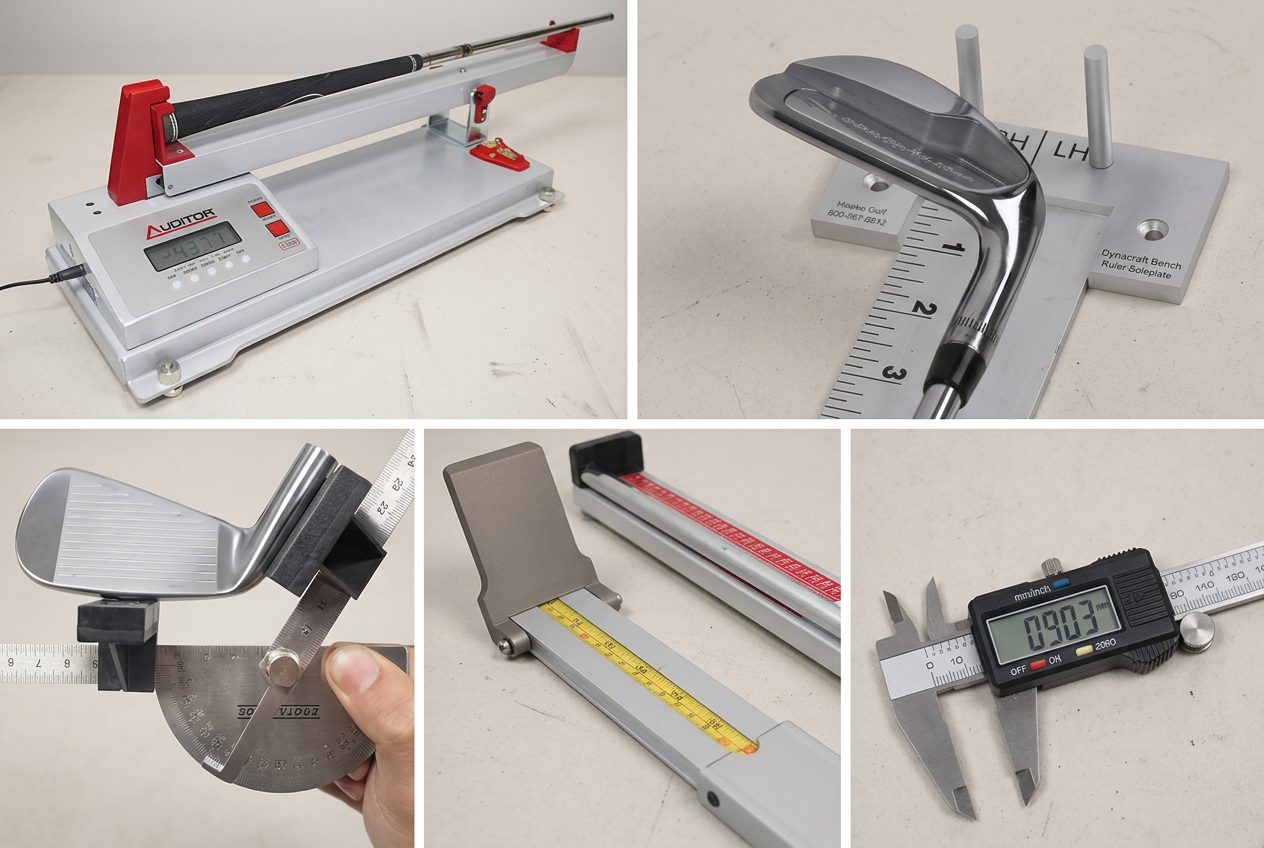
Measured, not guessed.
Every adjustment is verified on calibrated equipment — lie boards and digital swing-weight scales — and written onto a build sheet. The result is a set you can reproduce part-for-part, season after season.
Club fitting questions.
Ready to get fitted?
Submit a request and we'll book bench time for a technical assessment and a set dialed to your swing.